The hybrid work model has moved from a pandemic-era experiment to a permanent fixture of the modern workplace. According to a 2025 McKinsey report, over 58% of workers in developed economies now have the option to work remotely at least part of the time — and the majority prefer it. But preference and performance are two different things. Without the right structure, hybrid work can quietly erode your productivity, your visibility, and your career trajectory.
The professionals who truly thrive in hybrid environments are not the ones who simply enjoy the flexibility — they're the ones who are intentional about how they use it. This guide walks you through five proven strategies to help you perform at your best, stay connected with your team, and protect the boundaries that make flexible work sustainable long-term.
of employees say hybrid work improves their work-life balance — but only 39% say they feel equally visible for promotions compared to fully in-office colleagues. Structure and intentionality are what close that gap.
Strategy 1: Establish a Consistent Routine
STRATEGY 1 OF 5When your physical work environment changes day to day — sometimes home, sometimes office — a consistent routine becomes your anchor. Without it, the cognitive load of constantly re-orienting yourself creates a low-level mental fatigue that compounds over time and quietly chips away at your focus and output.
The most effective hybrid workers treat their routine as non-negotiable regardless of location. This means consistent start times, structured morning rituals, planned deep-work blocks, and predictable end times — whether you're at your home desk or in the office.
How to build a hybrid-proof routine:
- Set fixed start and end times — commit to them regardless of where you're working that day
- Block deep-work hours in your calendar — treat these as meetings you cannot cancel
- Create location-specific rituals — a short walk before logging on at home, or a coffee ritual at the office, signals to your brain that work mode has begun
- Plan your office days strategically — use in-office time for collaboration and relationship-building; use remote days for focused individual work
- Batch similar tasks by location — calls and meetings on office days, writing and deep analysis on home days
Strategy 2: Optimise Your Home Office
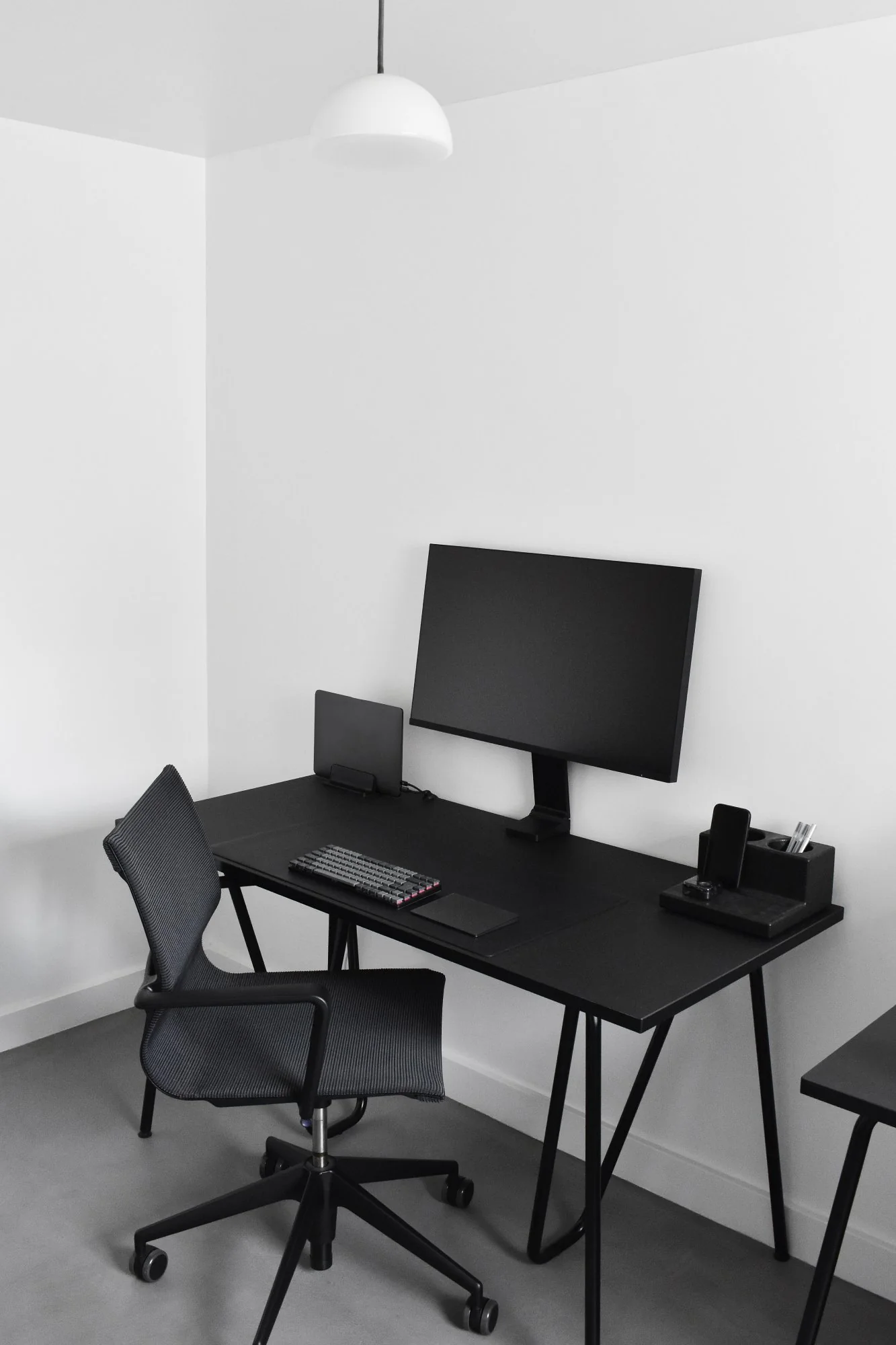
STRATEGY 2 OF 5Your home workspace directly affects your output, your energy levels, and your long-term physical health. A makeshift setup at the kitchen table might work for a day or two — but for professionals spending multiple days per week working remotely, the quality of your home environment has a measurable impact on performance.
Essential home office investments:
- Ergonomic chair — the single most important investment; poor posture over months leads to back and neck problems that affect focus and wellbeing
- External monitor — a second screen dramatically improves workflow
- Quality webcam and microphone — how you show up on video calls affects your professional presence and perceived engagement
- Reliable, fast internet — a wired Ethernet connection is always more stable than Wi-Fi for video calls
- Good lighting — natural light is best; a ring light or desk lamp positioned in front of you prevents the shadowed look on video
- Noise management — noise-cancelling headphones are worth every penny if you share your home with others during working hours
Strategy 3: Over-Communicate with Your Team
STRATEGY 3 OF 5Communication is the single biggest friction point in hybrid teams. When some people are in the office and others are remote, information flows unevenly. Side conversations happen in person that remote colleagues miss. Context gets lost. People feel disconnected.
Hybrid communication best practices:
- Share your schedule publicly — let colleagues know when you're remote, in-office, and heads-down unavailable
- Default to async first — before scheduling a meeting, ask whether the outcome could be achieved with a well-written message or a Loom video
- Write things down — decisions made verbally in the office must be documented and shared with the full team
- Use the right tool for the right message — urgent: direct message or call; project updates: project management tool; announcements: team channel; sensitive feedback: video call
- Make video calls inclusive — if any participant is remote, everyone should join from their own device
| Communication Type | Best Tool | When to Use |
|---|---|---|
| Urgent / time-sensitive | Phone call or direct message | Needs response within the hour |
| Project updates | Asana, Monday, Notion | Daily / ongoing task tracking |
| Team announcements | Slack / Teams channel | Information everyone needs |
| Complex discussions | Video call + written summary | Decisions requiring input |
| Async explanations | Loom video | Walkthroughs, demos, feedback |
| Sensitive conversations | Private video call | Feedback, performance, personal |
Find Flexible Roles That Value Your Communication Skills
Ready to put your hybrid work expertise to use? Discover premium opportunities with employers who prioritize work-life balance and reward strong communicators with competitive salaries.
Explore Flexible Career Opportunities →* Affiliate link — we may earn a commission at no extra cost to you. See our affiliate disclosure.
Strategy 4: Set Clear Boundaries
STRATEGY 4 OF 5One of the most seductive and dangerous aspects of hybrid work is that it can feel like you're always at work. The laptop is always there. The Slack notifications don't stop. Over months, this constant low-level availability erodes the recovery time your brain needs to perform at a high level — and leads directly to burnout.
How to set effective hybrid work boundaries:
- Set a hard stop time and honour it — close your laptop and physically leave your workspace at the same time each day
- Turn off work notifications after hours — use scheduled delivery settings in Slack and email so messages wait until morning
- Communicate your availability clearly — let your team know your working hours upfront
- Create a shutdown ritual — reviewing tomorrow's priorities, closing tabs, making a quick to-do list signals to your brain the workday is genuinely over
- Protect your lunch break — stepping away for even 20 minutes at midday measurably improves afternoon focus
Strategy 5: Stay Flexible and Visible
STRATEGY 5 OF 5The hybrid work model is still evolving. Policies change. Team dynamics shift. New tools emerge. The professionals who navigate this most successfully approach change with curiosity rather than resistance — and actively manage their visibility rather than assuming good work will speak for itself.
How to stay visible and adaptable in hybrid work:
- Volunteer for high-visibility projects — cross-functional initiatives, presentations to leadership, or mentoring programmes all increase your profile
- Share your wins proactively — send a brief weekly update to your manager summarising what you've accomplished
- Use in-office days for relationship-building — schedule one-on-ones, have lunch with colleagues, and attend team socials when on-site
- Stay open to policy changes — employees who demonstrate flexibility when policies shift earn trust and goodwill that pays off long-term
- Continuously evaluate what's working — every quarter, honestly assess whether your hybrid setup is serving your productivity, career growth, and wellbeing
Protecting Your Career Growth in a Hybrid World
One of the most underappreciated risks of hybrid work is the impact on career progression. Studies consistently show that remote and hybrid workers are at risk of being overlooked for promotions, leadership opportunities, and high-profile assignments — not because of performance, but because of reduced visibility. This is known as proximity bias.
Career protection strategies for hybrid workers:
- Schedule regular one-on-ones with your manager — don't let these slip when you're remote
- Make your career goals explicit; don't assume they're known
- Build relationships with senior leaders through project involvement, not just proximity
- Document your accomplishments consistently and share them during performance conversations
- Seek out a mentor or sponsor who can advocate for you regardless of your physical location
Unlock Premium Roles at Companies That Invest in Your Growth
Don't let proximity bias hold you back. Connect with forward-thinking employers who recognize talent regardless of location — and offer the flexibility + career advancement you deserve.
Find Growth-Focused Hybrid Roles →* Affiliate link — we may earn a commission at no extra cost to you. See our affiliate disclosure.
Your Hybrid Work Success Checklist
- Established consistent start and end times for workdays regardless of location
- Created a dedicated, ergonomic home workspace
- Shared your weekly schedule with your team so availability is transparent
- Identified which tasks are best done remotely vs. in-office
- Set up notification boundaries after working hours
- Scheduled regular one-on-ones with your manager
- Proactively shared accomplishments with your manager in the past month
- Used at least one in-office day this month for deliberate relationship-building
- Completed a quarterly review of whether your hybrid setup is working
- Identified one area of your hybrid routine to improve in the next 30 days
Frequently Asked Questions About Hybrid Work
What is a hybrid work environment?
A hybrid work environment is a flexible model where employees split their time between working remotely and working in a physical office. The key distinction from fully remote work is the regular expectation of some in-person presence.
How do you stay productive in a hybrid work model?
Productivity in hybrid work depends on structure and intentionality. Establish consistent routines, create a dedicated home workspace, plan your week so the right tasks happen in the right locations, and use collaboration tools to stay connected.
What are the biggest challenges of hybrid work?
The most common challenges are maintaining consistent communication, avoiding proximity bias in career progression, protecting work-life balance when working from home, and staying visible to decision-makers.
How do you maintain work-life balance in a hybrid environment?
Set fixed working hours and honour them consistently. Create a physical shutdown ritual at the end of each day, turn off work notifications after hours, and protect your lunch break.
How do I avoid being overlooked for promotions as a hybrid worker?
Be deliberate about visibility. Share your accomplishments proactively with your manager, use in-office days for relationship-building, volunteer for cross-functional projects, and schedule regular career conversations with your manager.
Ready to Find a Role That Offers Real Flexibility?
At Talent Loop, we work with companies that offer genuine hybrid and remote flexibility — not just policies on paper. Our career consultants can match you with roles that fit both your professional goals and your preferred way of working.
Take Our Free Career Assessment